
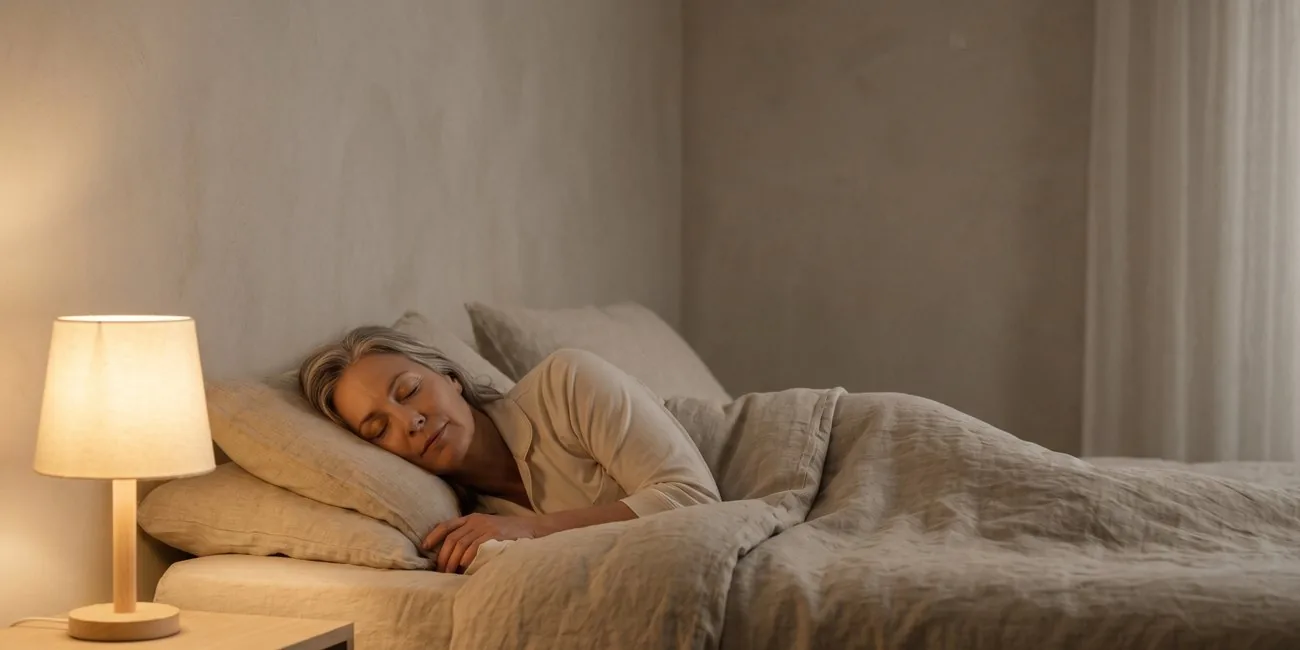
When a sound keeps bringing you back to wakefulness, bedtime can start to feel like something to get through. Noise sensitivity and sleep can be a difficult combination, especially when the disturbance is outside your control. Begin with what can make the room more comfortable, and treat extra background sound as an option rather than a requirement. A recording labelled for sleep is not a promise of a better night.
You may already have tried several things. There is no need to assemble a perfect bedtime routine before taking the noise itself seriously.
What can you change when noise is keeping you awake?
Start with the particular sound rather than changing everything at once. A rattling object, an appliance beside the bed or a television in another room may have a practical solution. Moving farther from a shared wall might be worth trying when your room allows it. Keep ventilation and fire safety intact; blocking a vent or interfering with a fire door is not a sound solution.
When another person can help, make the request concrete. Agreeing a lower television volume after a particular time gives you both something clearer to work with than another tired conversation about being considerate.
For noise outside your control, a brief daytime note about when it happens may help you explain the pattern. You do not have to spend the night listening for every occurrence. The aim is to make a useful request, not give the sound even more of your attention.
Does pink noise help you sleep?
Pink noise may feel pleasant to some people, but it should not be presented as a reliable sleep aid for everyone. A 2026 laboratory study followed 25 healthy adults over seven nights. Under the conditions tested, pink noise reduced REM sleep; earplugs mitigated most of the sleep effects of intermittent environmental noise (Basner et al., 2026).
This was a small, short adult study, not a test of every recording, volume or noise-sensitive sleeper. It is a reason to be cautious about confident promises, rather than a reason to worry about having enjoyed a sound before.
Your comfort still matters. You might prefer no added audio, a familiar low sound for a short while, or a different arrangement altogether. You do not have to learn to like pink, brown or white noise because somebody else swears by it.
Keep listening choices comfortable and optional
When you choose to play something, keep it low and stop if it adds irritation. Resist turning it up to compete with each new sound outside. A timer may suit you better than continuous playback, especially when you only want something familiar while settling down.
Think about what you still need to notice overnight, including alarms and anyone who depends on you. Earplugs need the same consideration, along with comfort and fit. Where sound is painful or you are unsure what protection is appropriate, seek individual hearing advice.
Our sound zone offers sounds to explore. It is also fine to open it, decide that more sound is not what you need, and close it again.
Give the evening a manageable ending
Choose a wind-down routine that fits the life you actually have. Perhaps you put tomorrow's essentials in one place, lower the light or read something familiar. NHS guidance includes a quiet, dark bedroom and a regular waking time among its suggestions for insomnia (NHS, n.d.). These can be useful starting points without explaining away an external noise problem.
Breathing exercises are optional. You can breathe comfortably at your own pace without holding your breath or following a screen. Sometimes a pause with fewer demands is enough for the moment.
If poor sleep persists or makes daily life difficult, speak with your GP and describe the whole pattern, including the sound. You deserve support with the nights as well as the tiredness afterwards.
The quiet space is there for a pause before bed. Take what feels helpful tonight and leave the rest.
References
- Basner, M. et al. (2026) ‘Efficacy of pink noise and earplugs for mitigating the effects of intermittent environmental noise exposure on sleep’, Sleep, 49(5), zsag001. Available at: https://doi.org/10.1093/sleep/zsag001 (Accessed: 20 September 2026).
- NHS (n.d.) ‘Insomnia’. Available at: https://www.nhs.uk/conditions/insomnia/ (Accessed: 20 September 2026).