
Blog
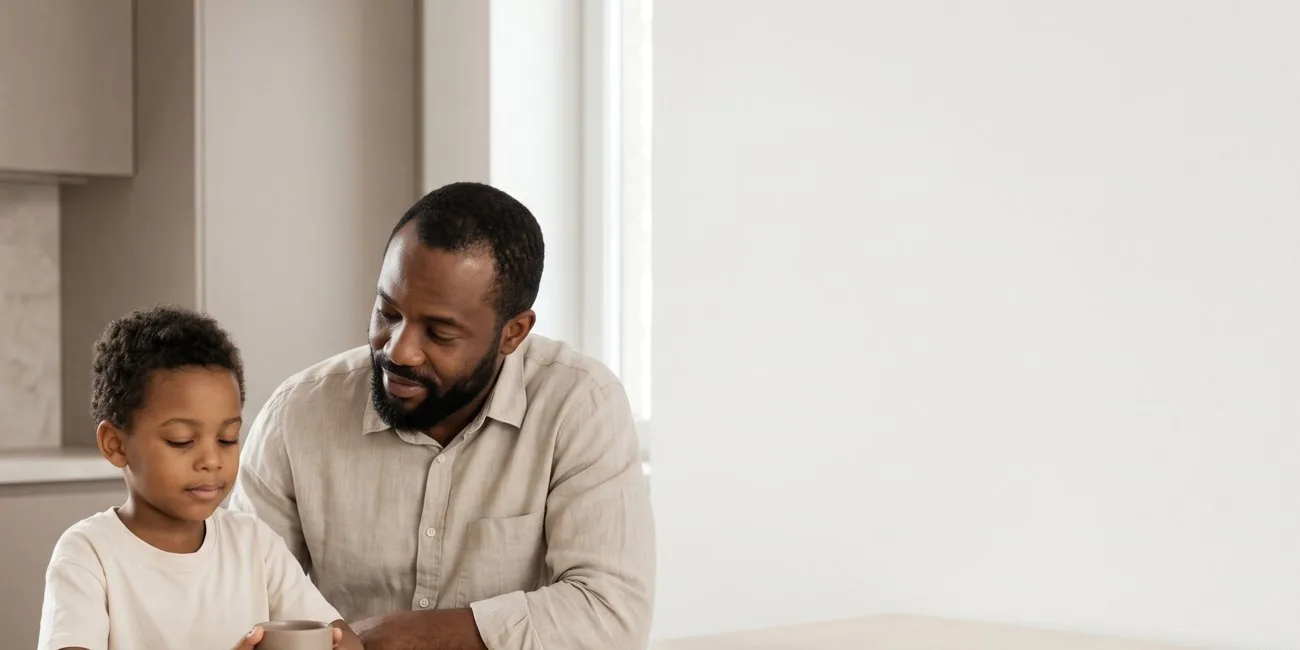
If your child covers their ears at the school gate, comes home wrung out after a birthday party, or dreads the hand dryer in every public toilet, you are not imagining it and they are not being difficult. For many children the world is genuinely too loud, and noise sensitivity is a real difference in how their nervous system takes in sound, not bad behaviour and not fragility.
The reassuring part is that once you can see it for what it is, there is a great deal you can do, and almost none of it involves asking your child to change who they are.
What does noise sensitivity look like in a child?
It looks different from child to child, but some patterns come up again and again. A noise-sensitive child might cover their ears or flinch at sounds others barely notice, become distressed or overwhelmed in busy, echoey places like supermarkets, assemblies and parties, or melt down afterwards once the effort of holding it together runs out. They may dread specific sounds, hand dryers, fire alarms, hoovers, blenders, and go to real lengths to avoid them.
Crucially, the difficulty often shows up as behaviour rather than words. A child rarely says "the acoustics in here are painful". They run, freeze, cry, refuse, or shut down. Reading that behaviour as a sensory response, rather than as defiance, is often the single change that helps the most.
Why is my child so affected by noise?
Most brains filter sound automatically, pushing the hum of a room into the background so attention can go elsewhere. For some children that filtering works differently, and sound stays in the foreground at full strength, every moment it is present. The effort of managing that, all day, in a world built for people who do not have to, is exhausting.
This is a recognised sensory difference (National Autistic Society, 2020), not a parenting failure or a sign of a spoilt child. Heightened or reduced reactions to sensory input, including sound, are formally part of the diagnostic picture for autism (American Psychiatric Association, 2013), and sensory sensitivity is also widely reported in children with ADHD and in highly sensitive children. It is wiring, not wilfulness.
Is it just a phase, or something more?
It can be either, and you do not need to know which to start helping. Many children are simply more sensitive to sound, with no label attached, and that is enough of a reason to take it seriously. You do not need a diagnosis for your child's experience to be real, and you do not need one to make their days gentler.
hushri does not assess or diagnose children. If you are worried, the most useful steps are to notice the patterns, lower the noise where you can, and talk with people who can see your child in context: your GP or health visitor, and your child's school or nursery, who can make sensory adjustments. Bring the specifics you have noticed; concrete examples help a professional far more than a general worry.
How can I help my child?
Start by naming it kindly, so your child learns that this is a real thing about how they are made, not a fault. From there, small, practical changes tend to do the most:
- Lower the noise where you can at home, and build in quiet time after noisy places rather than stacking demands on top of each other.
- Give warning before loud events, and always offer an exit. Knowing they can leave often makes staying possible.
- Let them use ear defenders or headphones without embarrassment. Protecting their ears is not avoidance, it is access.
- Keep a calm base, a bedroom corner or a quiet room, that is theirs to retreat to.
- Resist the urge to make them "toughen up". Pushing a child through sensory pain teaches them to mask, not to cope.
The aim is not to fix your child. The aim is to turn the world down enough that they can be themselves in it.
If you would like to understand more, our guide to what noise sensitivity is has a section on what it can look like in children, and the gentle self-check has a version written for parents thinking about a child.
hushri is an online home for people who experience noise sensitivity, auditory defensiveness, or sensory overload. There is no diagnosis required, and no explanation needed. You are welcome here exactly as you are. Explore hushri.com for guides, honest reviews, and downloadable resources.
The hushri YouTube channel is now live, with gentle sensory soundscapes made for senses like yours. Subscribe to the channel.
Know a parent whose child finds the world too loud? If this helped you, it might help them feel less alone. Sharing it takes a moment, and could be the thing that finally makes sense of it for someone you care about.
References
- American Psychiatric Association (2013) Diagnostic and statistical manual of mental disorders. 5th edn. American Psychiatric Association.
- National Autistic Society (2020) Sensory differences. Available at: https://www.autism.org.uk/advice-and-guidance/topics/sensory-differences (Accessed: 2 May 2026).